
Skip to content
Scribbify

Automated lead follow-up

Automated lead follow-up for service businesses, so no deal is lost to silence.

We build lead follow-up systems that keep every open lead moving: timed messages across email and WhatsApp, branching on what the lead does, stopping the moment they reply and putting the conversation back in front of the right salesperson.

No lead left without a next step, and salespeople who spend their time on replies, not reminders.

You’ll recognise this

  • Leads get one reply, then nothing, because the salesperson got busy.
  • Follow-up depends on reminders in someone’s calendar.
  • Old enquiries sit in the CRM with no next step and no reason recorded.
  • Generic drip emails keep going after the lead has already replied.

01 The business problem

Follow-up is the work everyone agrees with and nobody does.

Most buyers don’t say yes to the first message. They are busy, comparing, waiting on a colleague or simply forgot. The business that follows up politely, at the right moment, with something useful, usually wins, and the one that sends one email and waits usually doesn’t.

Salespeople know this, but follow-up competes with new enquiries and live deals, and it always loses. The result is a CRM full of leads with no next step and a marketing budget that pays for the same buyers twice.

Automating follow-up is not about blasting sequences. It is about a system that knows where each lead is, sends the right next message, notices when they reply and gets out of the way when a person should take over.

  1. Lever 01

    Revived pipeline

    Leads that went quiet get a timely, relevant next message instead of being forgotten.
    Moves: Lead-to-meeting rate
  2. Lever 02

    Sales time on replies

    Reminders, nudges and chasing handled by the system; people step in when the lead responds.
    Moves: Selling time per rep
  3. Lever 03

    Spend recovered

    Leads you already paid to acquire are worked properly before you buy more.
    Moves: Cost per customer

02 In your business

What this looks like on an ordinary week.

Three situations owners tell us about, and what changes once this is in place.

  1. Scenario 01

    The quote that went quiet

    Say you send a quote and hear nothing. Your team means to follow up, then gets busy, and three weeks later the client tells you they went with someone else.

    With it in place: A short series of follow-ups goes out on its own, stops the moment they reply, and hands warm replies to your salesperson.

  2. Scenario 02

    “Not now, try me in spring”

    Say a good prospect asks you to get back in touch in three months. The note sits in someone’s inbox and is never seen again.

    With it in place: The follow-up is scheduled with the context attached, and it arrives on time even if the original person has moved on.

  3. Scenario 03

    Everyone follows up differently

    Say one salesperson chases five times and another gives up after one email. Your results depend on who picked up the lead.

    With it in place: Every lead gets the same follow-up you designed, and your team sees who replied and who needs a call.

03 Who it is for

For businesses with more leads than follow-up.

A good fit when

  • You have open leads in your CRM with no next step.
  • Follow-up depends on individual salespeople remembering.
  • Your sales cycle has several touches before a decision.
  • You want follow-up that stops when people reply, not generic drips.

Probably not when

  • You want to email bought lists or people who never contacted you.
  • Your deals close on the first conversation.
  • Your CRM’s built-in sequences already cover what you need.
  • Founders of B2B service firms

    You founded a B2B service business, and sales and delivery have outgrown your inbox, your memory and your best salesperson’s phone.

    You watch: Pipeline, win rate and revenue per person

    What changes: Every lead answered and followed up, a pipeline you can believe, and growth that doesn’t need a new hire for every few clients.

  • Owners of local & consumer service businesses

    You run a travel agency, clinic, real estate brokerage, training business or similar, where customers arrive on WhatsApp, calls and ads, often out of hours.

    You watch: Enquiries answered, bookings and repeat customers

    What changes: Every enquiry answered in minutes, quotes followed up until customers decide, and a team that spends its day on the customers in front of it.

04 What we build

Follow-up that behaves like a good salesperson.

  • Branching sequences

    Different paths for different lead stages, sources and answers, rather than one drip for everyone.
  • Email and WhatsApp

    Messages on the channel the lead uses, with WhatsApp templates prepared for approval.
  • Stop on reply

    Any reply, booking or unsubscribe stops the sequence at once and alerts the owner.
  • Handback to sales

    Warm replies routed back to the right person with the history, as a task they can act on.
  • Lost reasons recorded

    Leads that end are closed with a reason, so you learn why deals stall instead of guessing.
  • Sequence reporting

    Replies, meetings and wins by sequence and step, so weak messages are rewritten.

05 How it works

How a quiet lead becomes a conversation again.

  1. Step 01

    Lead goes quiet

    No reply after a set time, or a stage with no activity, starts the right sequence for that lead.
  2. Step 02

    Useful next message

    A message that adds something, an answer, an example or a time to talk, on the lead’s channel.
  3. Step 03

    Branch on behaviour

    Opens, clicks, replies and bookings change the path; disinterest or a bounce ends it.
  4. Step 04

    Person takes over

    A reply goes straight to the owner with the full history, and the sequence stops.
  • Website forms
  • Meta lead ads
  • WhatsApp enquiries
  • Booked calls

Follow-up sequences

Built for one business, owned by it

  • Replies stop the sequence
  • Warm leads to a person
  • Lost reasons on record
  • Reply rates by step
Sources: Website forms, Meta lead ads, WhatsApp enquiries, Booked calls. The system: Follow-up sequences. What it produces: Replies stop the sequence, Warm leads to a person, Lost reasons on record, Reply rates by step.

06 Project process

Discovery, build, launch, then better.

Phases, not promises. Each step is decided on what the previous one showed.

  1. 01

    Week 1

    Stages and stalls

    Find where leads stall today, and agree the messages a good salesperson would send at each point.

  2. 02

    Weeks 2–4

    First sequences live

    The highest-volume stall covered first, with stop-on-reply and handback working.

  3. 03

    Weeks 5–8

    Branches and reporting

    Further stages, channels and reporting by step, once the first sequence is proven.

  4. 04

    Ongoing

    Rewrite what doesn’t work

    Messages and timing improved from replies and meetings, step by step.

Works with

  • HubSpot
  • Zoho CRM
  • Pipedrive
  • Gmail
  • Outlook
  • WhatsApp Business Platform
  • Calendly
  • Google Calendar
  • Slack

07 Proof

Built and run in-house first.

We run the same kind of system on our own business before we build it for anyone else.

  • LeadSpidey · AI SDR for inbound leads

    Multi-step follow-ups that branch on what each lead does, reset when they reply and stop on disinterest or bounces.

  • Prosvano · LinkedIn automation

    LinkedIn and email sequences, paced inside each account’s limits and stopped on reply.
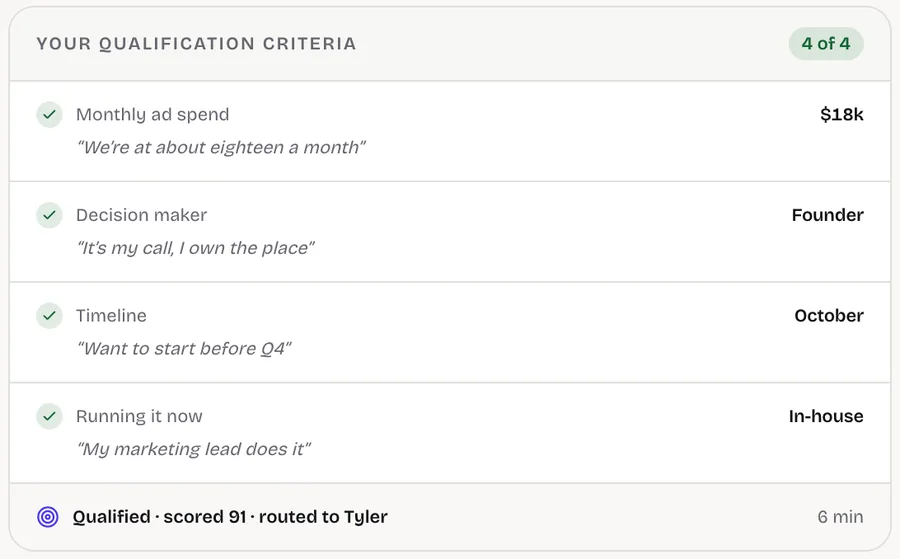
LeadSpidey qualification criteria, answered in conversation (sample data).

In-house product engineering case study

LeadSpidey: building an AI SDR for inbound leads

How we built an AI agent that answers every inbound lead on WhatsApp or email, qualifies it in conversation and books the meeting, with people in control.

Read the case study
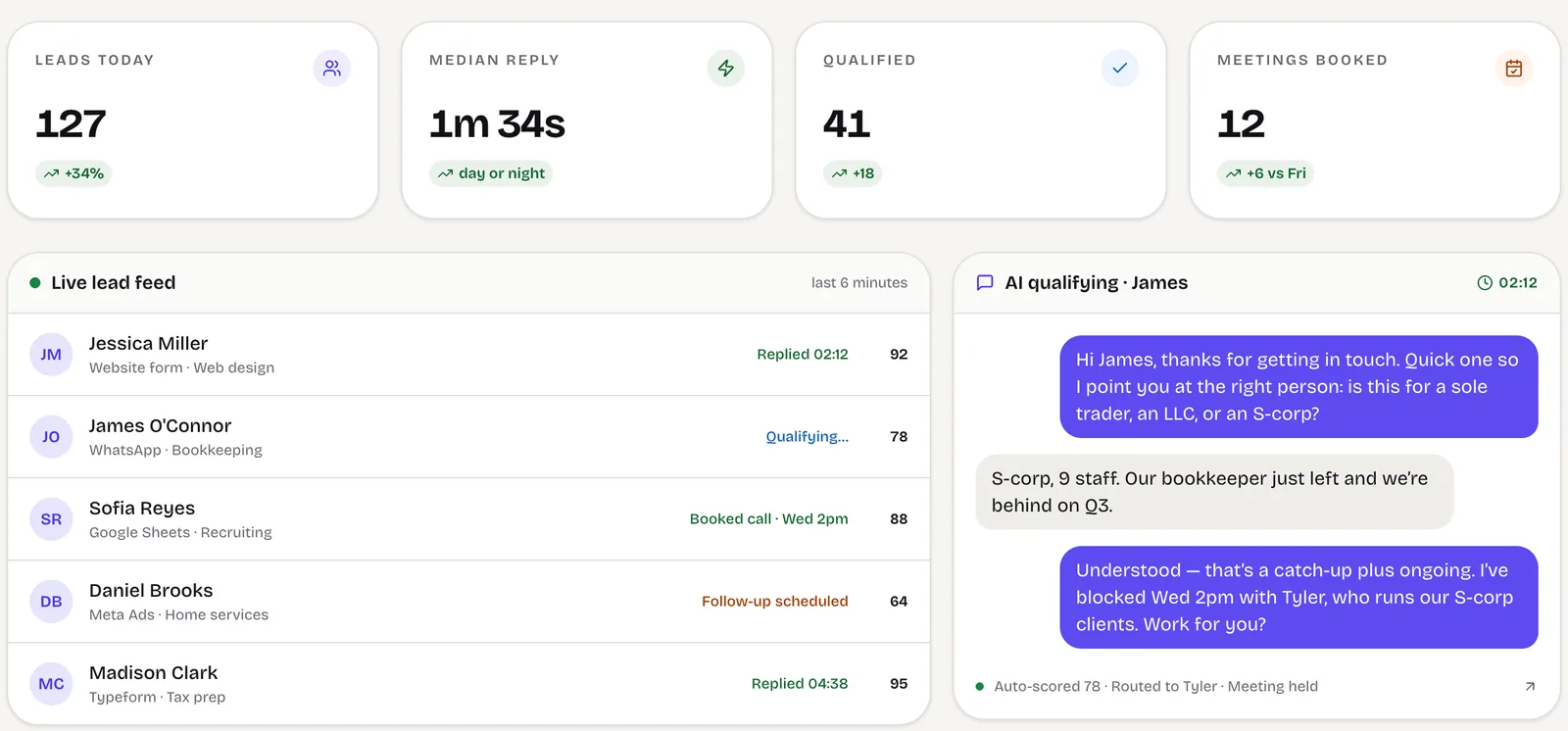
LeadSpidey dashboard: a live lead feed beside an AI qualifying conversation (sample data).

08 Cost and engagement

What decides the cost.

Every engagement starts with a short, fixed scoping sprint that ends in a written scope, so you know what the first build takes before you commit to it.

  • How many stages and sequences need their own path.
  • Channels used: email only, or email and WhatsApp templates.
  • Whether sequences run inside your existing CRM or a custom one.
  • AI-written messages versus fixed templates, and how much review they need.
  • Reporting by sequence, step and salesperson.

09 Product or custom build

You may not need us to build this.

We would rather point you to the right answer than quote for work you don’t need.

LeadSpidey

Our product, ready to use

For inbound leads, LeadSpidey runs multi-step follow-ups that branch on what each lead does, reset when they reply and stop on disinterest or bounces, out of the box.

Visit LeadSpidey

A Scribbify build

Custom workflows, integrations and dashboards

We build custom follow-up when it has to run inside your own CRM, across several stages after the first meeting, or around quotes, documents and approvals specific to your business.

Fix your lead follow-up

10 Questions

Before you write.

Won’t automated follow-up annoy our leads?
Badly designed follow-up does. Ours stops the moment someone replies, books or opts out, branches on what they do and sends fewer, more useful messages. Leads should feel remembered, not processed.
Can follow-ups go out on WhatsApp?
Yes, to people who contacted you, using templates approved by WhatsApp. Messages outside the 24-hour window must use an approved template.
Does this replace our salespeople?
No. It handles the reminders and the chasing so salespeople spend their time on leads who reply.
Can it work inside our current CRM?
Usually. We build on CRMs with a usable API, such as HubSpot, Zoho CRM and Pipedrive, or inside a custom CRM.
How is this different from LeadSpidey?
LeadSpidey runs listening follow-ups for inbound leads as a product. We build custom when follow-up spans your whole sales cycle or depends on your own systems.
How many follow-ups before we stop?
It depends on your sales cycle, but every sequence has a clear end: a reply, a booking, an opt-out or a set number of useful touches, after which the lead is closed with a reason.
Is automated follow-up allowed in the UK, US and UAE?
Follow-up to people who contacted you is normal practice, but consent and opt-out rules differ by channel and country. We build in opt-outs and stop rules and agree the rules with you; your advisers decide your legal position.

Fix your lead follow-up

Give every lead a next step, automatically.

Tell us where leads go quiet today, how many are open and which CRM you use. A partner replies within one business day.

  • A partner reads every enquiry
  • A 45-minute working call
  • A written scope you can decide on

Or write to us at [email protected]

All solutions

For example: enquiries wait overnight before anyone replies, delivery re-enters what sales already collected, or the weekly report takes hours to put together.

We use your details only to reply to this enquiry. No newsletters, no list sharing. See our privacy policy.