Skip to content
Scribbify

In-house product engineering case study · LeadSpidey

AI SDR case study: how we built LeadSpidey, and taught it when to stop.

LeadSpidey is our own product: an AI SDR that replies to inbound enquiries in their own words on WhatsApp or email, qualifies them in a real back-and-forth and puts the meeting on the calendar. This is how we designed and built it, and what it taught us about putting AI in front of real buyers.

An in-house case study. LeadSpidey is a Scribbify product. This page describes how we engineered and operate it; it is not a client engagement or a client result.

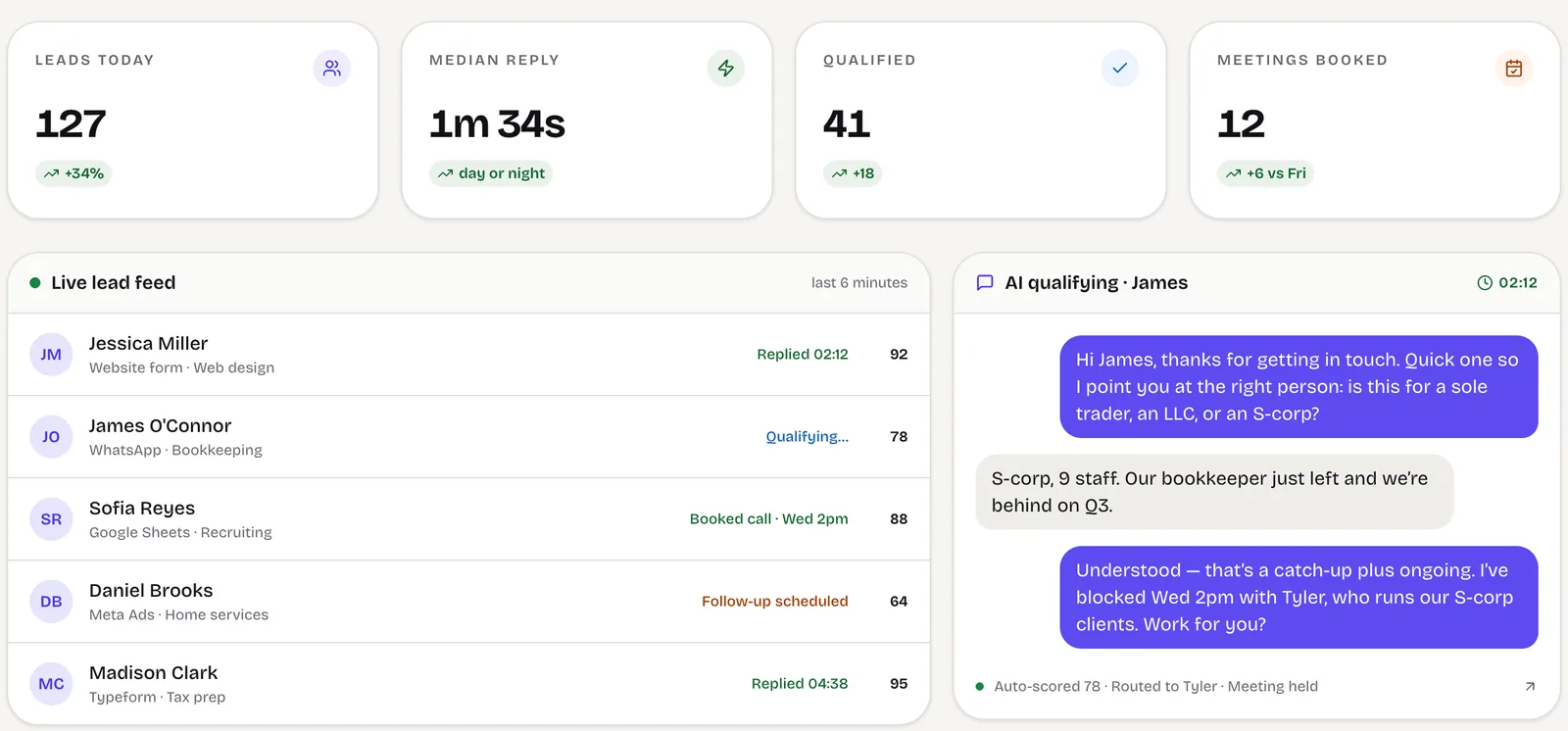
LeadSpidey dashboard: a live lead feed beside an AI qualifying conversation (sample data).

01 · Problem

Inbound leads are paid for, then left waiting.

A business pays for every inbound lead, through ads, content or referrals, and then too often lets it wait. Enquiries arrive in the evening, at weekends or while the team is busy, and by the time someone replies the buyer has spoken to a competitor.

The obvious answer, an instant autoresponder or a chatbot, doesn’t solve it. A generic reply tells the buyer nobody read their message, and a bot that can only follow a script falls apart at the first real question.

We set out to build something closer to a good sales development rep: one that reads what the lead actually wrote, answers it, asks the questions that matter for qualification, books the meeting when the lead is a fit and hands over cleanly when a person should take it from there.
02 · Architecture

Every source in, one conversation, one outcome.

Leads come from many places: Meta lead forms, Google Sheets, CSV uploads, website webhooks and the CRM. The first job is to bring them into one place and collapse duplicates, so the same person arriving twice is treated as one lead with one conversation.

From there the agent runs the conversation on the channel the lead used, WhatsApp or email, against the qualification criteria the business sets: budget, timeline, who decides. It scores and categorises the lead from what they said, and books qualified leads onto the team’s calendar with the full transcript attached.

  • Meta lead forms
  • Website webhooks
  • Google Sheets and CSV
  • CRM

AI SDR agent

Built for one business, owned by it

  • Replies on WhatsApp or email
  • Scored, categorised leads
  • Booked meetings
  • Transcripts for the team
Sources: Meta lead forms, Website webhooks, Google Sheets and CSV, CRM. The system: AI SDR agent. What it produces: Replies on WhatsApp or email, Scored, categorised leads, Booked meetings, Transcripts for the team.

03 · Implementation

The parts that took the most care.

  • One person, not three records

    Leads arriving from several sources are matched and merged, so a buyer who fills in a form and then sends a WhatsApp message gets one coherent conversation.

  • Qualification as conversation

    Criteria are asked naturally, in the flow of the reply, rather than as a form in disguise, and the answers are stored so the score can be explained.

  • Follow-up that listens

    Multi-step follow-ups branch on what each lead does, reset when they reply and stop on disinterest or a bounced address, so persistence never turns into pestering.

  • A clean handover

    When a lead is qualified, the meeting is booked and the team receives the whole transcript, so nobody asks the buyer to repeat themselves.

04 · Reliability

Designed for the moments it shouldn’t act.

Judgement over speed
An instant wrong answer costs more than a slower right one, so the agent is built to be accurate first and fast second.
A planned exit
The moment a person takes over is designed, not hoped for: questions outside the agent’s rules go to the team.
Every action logged
Each reply, score and booking is recorded, because nobody trusts an agent with the next step if they can’t see the last one.
Channel rules respected
Follow-ups stop on disinterest and bounces, and messaging stays within each channel’s rules.

05 · Evidence

See it for yourself.

LeadSpidey is a live product with its own site. The screenshots here are from the product with sample data; we don’t publish customer names or results.

The product’s site describes what it does today. If you want to judge our engineering, that is the honest place to start.

LeadSpidey dashboard: a live lead feed beside an AI qualifying conversation (sample data).
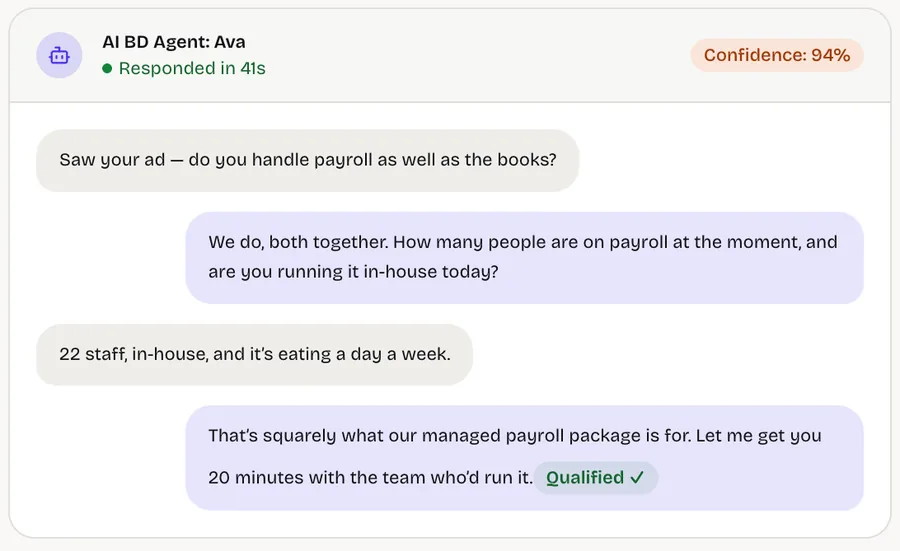
A LeadSpidey agent answering and qualifying an enquiry (sample conversation).
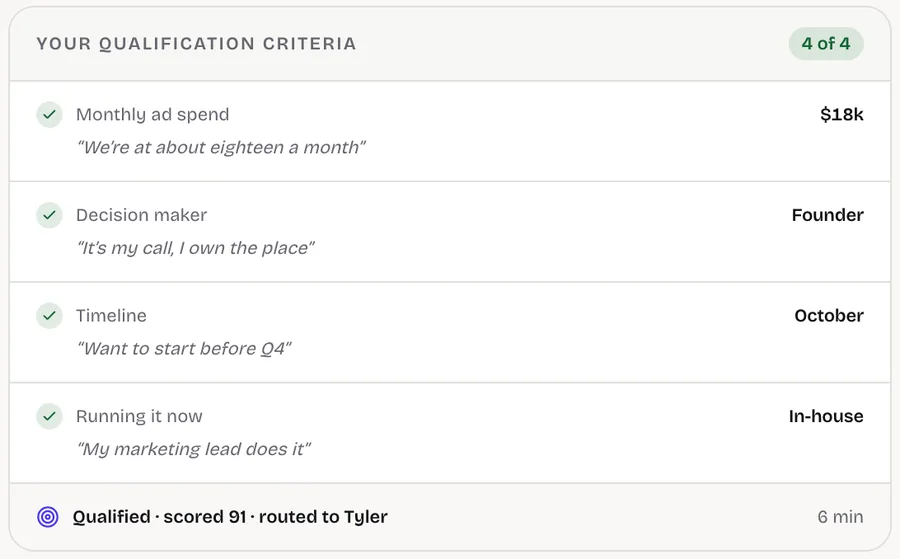
LeadSpidey qualification criteria, answered in conversation (sample data).
See LeadSpidey live

06 · For your business

How we would build this for you.

If LeadSpidey fits your inbound flow, use it. When your qualification depends on your own CRM, several brands, unusual criteria or approval steps, we build the same kind of agent around your workflow, using what we learned here.

Questions

About this case study.

Is this a client project?
No. LeadSpidey is Scribbify’s own product. This is an in-house product engineering case study: it shows how we build, not results for a client.
Can we use LeadSpidey instead of a custom build?
Yes, if your process is close to a standard inbound flow. We recommend the product first and build custom only where it doesn’t fit.
Which channels does LeadSpidey work on?
WhatsApp and email, with leads coming in from Meta lead forms, Google Sheets, CSV, website webhooks and CRMs.

Start a project

Talk to us about an AI SDR

A few lines are enough. A partner reads every enquiry and replies within one business day.

We use your details only to reply to this enquiry. No newsletters, no list sharing. See our privacy policy.

Every inbound lead answered by something that listens.

We built it for ourselves first. Tell us your workflow and we will tell you how the same engineering applies.

Or write to us at [email protected]