Skip to content
Scribbify

Scribbify helps your brand scale revenue with custom software, marketing funnels, outbound setups, AI sales agents, AI support agents, workflow automation, internal SaaS, dashboards and AI automation.

One partner to win more leads, convert more of them and keep the customers you already have, with the funnels, outreach, automation, AI agents and software behind it. Built around the tools you use today, owned by you, and run with you if you want.

The gaps between tools

You have the tools and the people. The work still falls between them.

Growth adds more enquiries, more clients and more tools. It also adds more chasing, more copying and more questions that only you can answer.

  • Between the enquiry and the team

    A lead arrives, but nobody knows who should reply.

    It sits in a shared inbox. Everyone assumes someone else has it.

  • Between sales and delivery

    A deal closes, but delivery has to ask for the scope again.

    What the client said in three sales calls lives in one person’s notes.

  • Between the work and the people running it

    The founder needs an update, so someone starts building a spreadsheet.

    The numbers exist in five tools. Pulling them together takes an afternoon.

In each case the information existed. It just did not travel with the work.

People end up carrying context between tools and teams by hand: forwarding, re-typing, asking again. Every handoff depends on someone remembering, and the more you grow, the more of that falls back on you.

Your gaps may look different. For example, yours might be quotes that wait for approval, or clients who chase you for updates. The pattern is usually the same: the tools work, but the handoffs between them do not.

How it connects

One client journey, from first reply to delivered work.

Most service businesses already go through these five stages. What matters is what passes between them: the context, the next action and the person responsible.

We call the connected result a revenue and operating system. In plain terms: the tools and steps that carry a client from a first reply to delivered work, without anyone copying details from one place to another.

It is a description of the journey, not a promise to automate it. People still decide what is offered, agreed and delivered.

  1. Stage 1

    Attract potential clients

    When it is not working

    Most new work comes from referrals, and outreach happens when someone has a spare afternoon.

    What changes

    Give relevant prospects a clear way to discover and contact you.

    Who decides: You approve who is contacted and what is said.

    What we build

    Outbound and marketing systems

    Target lists, email and LinkedIn sequences that stop when someone replies, and pages and forms that capture each enquiry.

    • Target lists
    • Email sequences
    • LinkedIn outreach
    • Landing pages & forms

    Handoff to stage 2, Respond and qualify Every reply and form lands in one place, with where it came from attached.

  2. Stage 2

    Respond and qualify

    When it is not working

    A good enquiry arrives at 9pm and waits until someone is free the next morning.

    What changes

    Help suitable enquiries reach a useful conversation while interest is fresh.

    Who decides: Prices, unusual requests and anything sensitive go to a named person.

    What we build

    Lead response and qualification

    A prompt first reply on email or WhatsApp, your qualifying questions asked in conversation, and a meeting offered to the enquiries that fit.

    • Instant first reply
    • WhatsApp & email
    • Qualifying questions
    • Meeting booking

    Handoff to stage 3, Move the work forward The conversation reaches the client record with what was asked, what they said and who owns the next step.

  3. Stage 3

    Move the work forward

    When it is not working

    A promising deal goes quiet because the follow-up lived in one person’s inbox.

    What changes

    Keep the context, next action and responsible person together.

    Who decides: People decide what is offered and when a deal is agreed.

    What we build

    CRM and workflow automation

    One record for each client, reminders that do not depend on memory, and routine steps such as proposals, approvals and onboarding tasks running across the tools you already use.

    • Custom CRM
    • Follow-up reminders
    • Proposals & approvals
    • Onboarding tasks

    Handoff to stage 4, Deliver the work Once the engagement is agreed, delivery receives the scope, the client’s context and a named owner.

  4. Stage 4

    Deliver the work

    When it is not working

    A new project starts with three emails asking the client for things sales already knew.

    What changes

    Give the team the scope, information and tools needed to do the work.

    Who decides: Your team keeps the client relationship. The tools carry the admin around it.

    What we build

    Portals and internal tools

    Client portals for documents, approvals and status, and internal tools shaped around how your team actually does the work.

    • Client portals
    • Document collection
    • Status updates
    • Internal tools

    Handoff to stage 5, See what needs attention Progress, delays and missing information are recorded as the work happens, not rebuilt later for a report.

  5. Stage 5 · across every stage

    See what needs attention

    When it is not working

    You ask how things are going, and someone spends the afternoon building a spreadsheet.

    What changes

    Spot stalled enquiries, overdue work and missing information without assembling another report.

    Reads from

    • 01Attract
    • 02Respond
    • 03Move forward
    • 04Deliver

    Feeds back: What you see feeds back into every stage: which sources bring suitable enquiries, where replies stall and which projects need help.

    Who decides: Each view has a named person who acts on what it shows.

    What we build

    Dashboards

    Live views drawn from the same records the other stages use, with each figure traceable to where it came from.

    • Pipeline views
    • Overdue work
    • Missing information
    • Where enquiries come from

An illustrative example

Follow one enquiry through a consultancy.

Say you run a 20-person consultancy. This is how one enquiry could move through the five stages once the handoffs are connected.

Illustrative, not a client result. A reply is not a won deal: people decide what is offered and when it is agreed.

  1. 01 Attract potential clients

    A finance director at a manufacturer replies to your outreach. Their month-end close keeps slipping, and they ask how you would approach it.

  2. 02 Respond and qualify

    They get a reply that evening. Two qualifying questions confirm the size of the team and the deadline. Their question about fees goes to a partner, who suggests a call.

  3. 03 Move the work forward

    The record holds the original reply, their answers and the next action: a proposal by Thursday, owned by that partner. If Thursday passes, the partner is reminded.

  4. 04 Deliver the work

    The client agrees the engagement. The delivery lead receives the agreed scope, the contacts and the notes from the sales conversations, so nobody asks the client to repeat themselves.

  5. 05 See what needs attention

    Your weekly view shows the engagement on track, one document still missing from the client, and two other enquiries waiting for a reply.

Where to start

Start with the gap that costs you most.

You do not need a complete rebuild, a new CRM or every stage at once. Most work starts in one of two places.

  • 01 · Attract
  • 02 · Respond
  • 03 · Move forward

Win and convert clients

A good place to start if you see

  • Outreach that happens in bursts, then stops
  • Replies that wait until someone is free
  • Qualifying questions asked differently each time
  • Follow-up that depends on someone remembering
  • 03 · Move forward
  • 04 · Deliver
  • 05 · See

Run and deliver the work

A good place to start if you see

  • The same details typed into several tools
  • Handoffs where nobody is sure who owns the next step
  • Reports assembled by hand every week
  • Delivery admin that crowds out the actual work

Both paths use the same client records and the same handoffs, so a fix in one prepares the other. They are starting points, not separate packages. You can stop after the first fix, or carry on when the next one is worth it.

How an engagement starts

One gap at a time, checked in real use.

Every engagement follows the same four steps. The first is a conversation about how your work runs today.

  1. 01

    Understand the workflow

    We talk with you and the people doing the work, and follow how an enquiry or a job really moves today. We write down what we find, so you can check it.
  2. 02

    Choose the first gap

    Together we pick the one handoff or job that costs you most, and agree what should change, such as replies sent the same day or a report nobody has to build.
  3. 03

    Implement the fix

    We build or connect what that gap needs, keep the tools that already work, and put it in your team’s hands as soon as it is usable.
  4. 04

    Measure and improve

    We check the change in real use against what we agreed, adjust it, and only then decide with you whether the next gap is worth fixing.

We do not publish fixed timelines or prices, because both depend on the gap you choose. Any scoping work beyond the first conversation is agreed with you before it starts.

Evidence, not promises

We build and run systems like these ourselves.

Three separate software products we own and operate, each close to one stage of the journey. They are our own experience, not client results, and you do not need to use them to work with us.

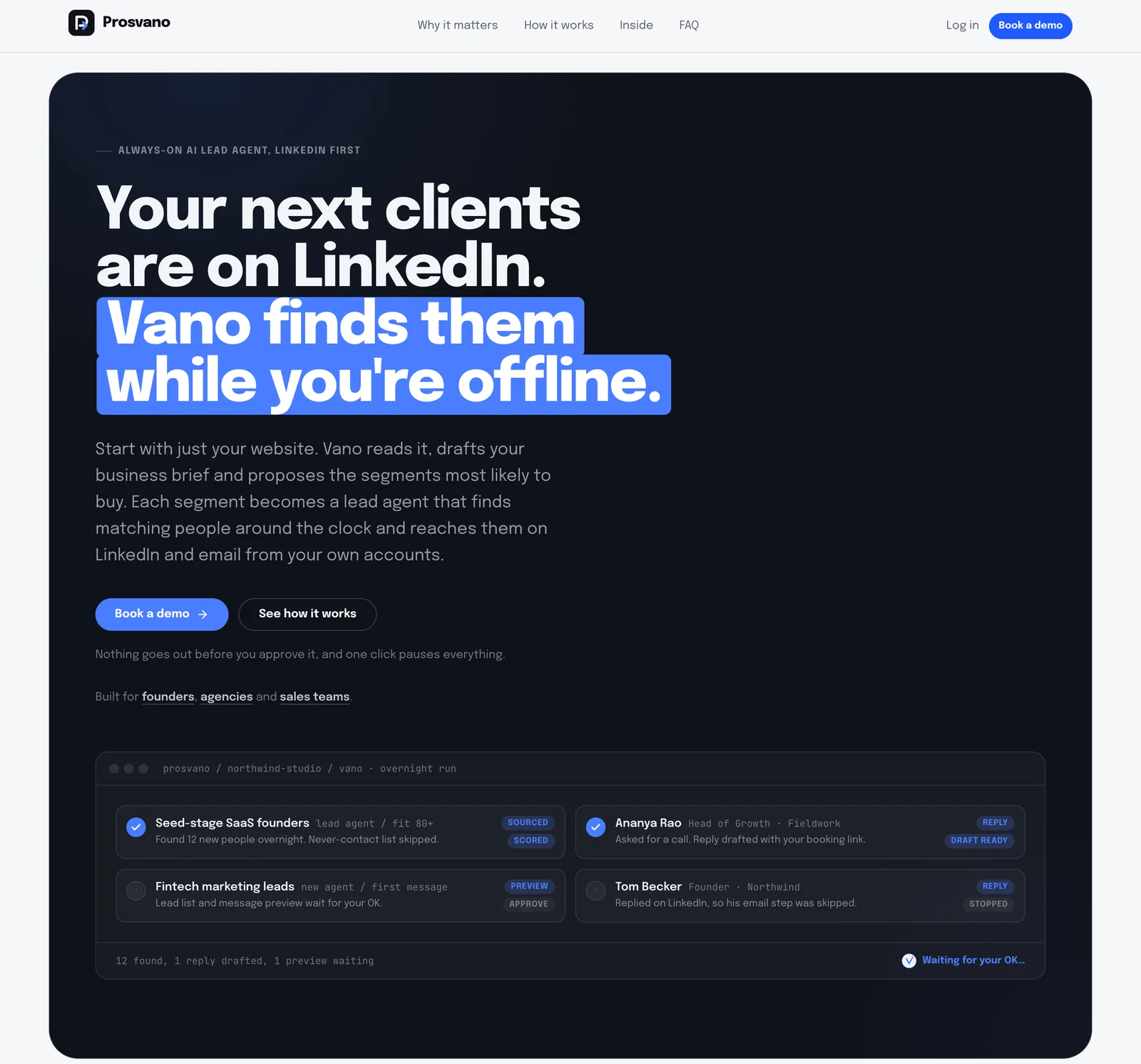
  • Prosvano’s homepage: an always-on AI lead agent for LinkedIn.

    Our own product · Stage 1, Attract potential clients

    Prosvano

    LinkedIn automation

    Prosvano finds and contacts prospects. It shows how we build outbound with approval before anything is sent.

    What it proves: We can build multi-channel automation with human approval built in, and the pipeline, inbox and reporting a custom CRM needs.

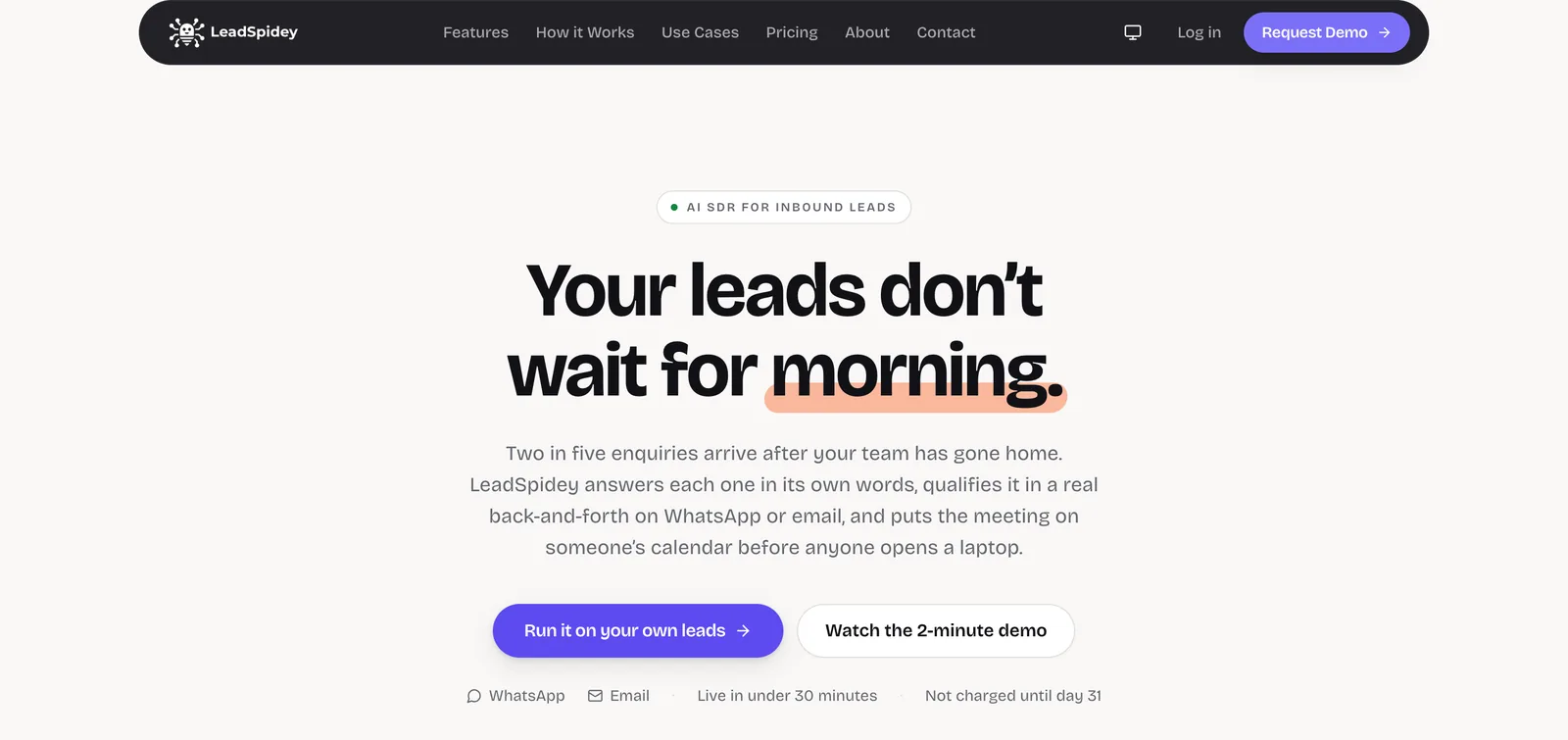
  • LeadSpidey’s homepage: an AI SDR that answers inbound leads on WhatsApp or email.

    Our own product · Stage 2, Respond and qualify

    LeadSpidey

    AI SDR for inbound leads

    LeadSpidey answers and qualifies inbound enquiries. It shows how we build a first response that knows when to hand over to a person.

    What it proves: We can build AI agents that talk to real customers, qualify them against business rules and hand over to people at the right moment.

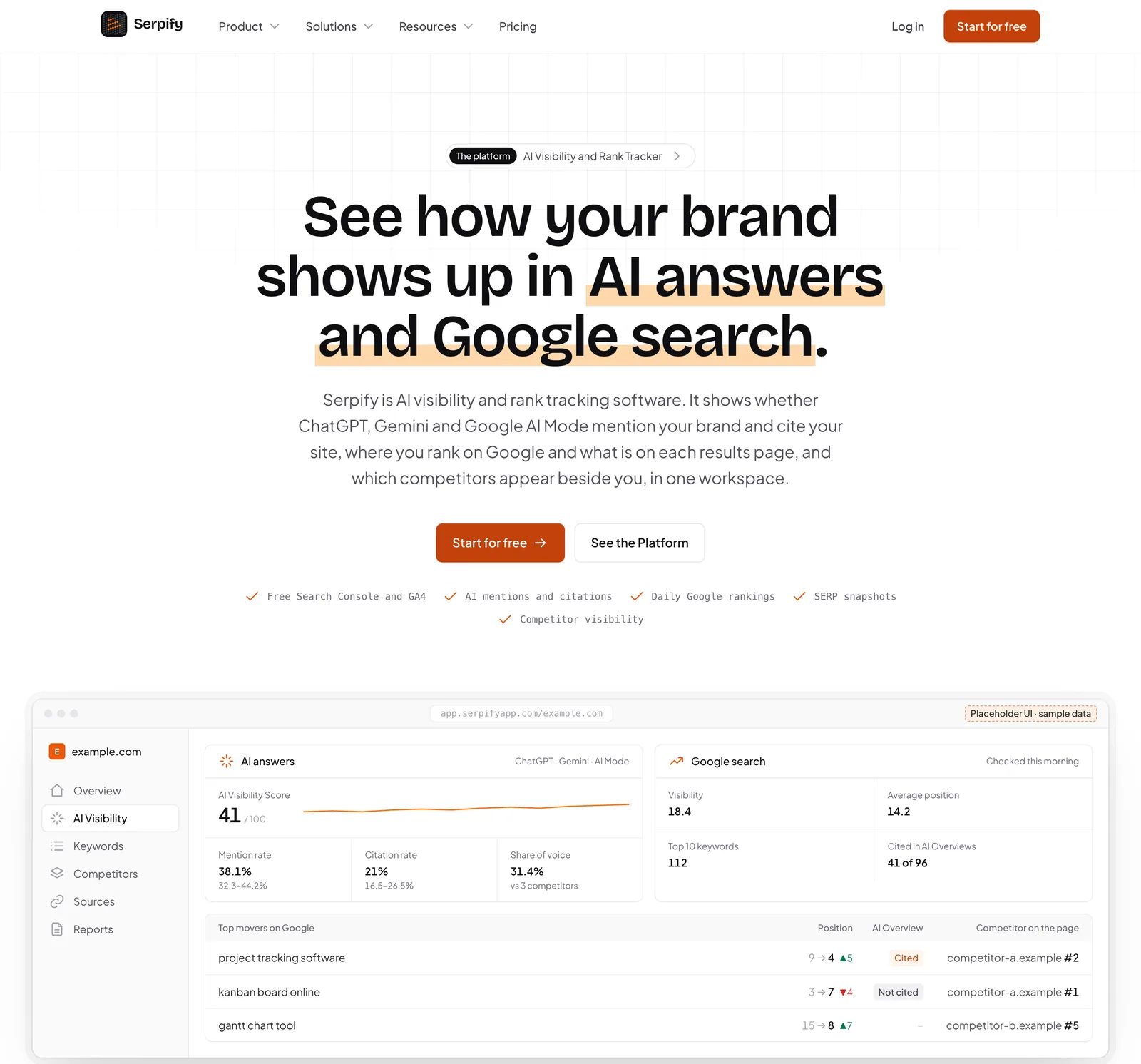
  • Serpify’s homepage: AI answers and Google search tracked side by side in one workspace.

    Our own product · Stage 5, See what needs attention

    Serpify

    AI visibility and rank tracking

    Serpify tracks search and AI visibility. It is not an operations dashboard, but it shows how we build daily data collection and reporting people can trust.

    What it proves: We can build data-heavy dashboards, daily data pipelines and client reporting, and we understand search and AI visibility from the inside.

The products run independently; they are not one integrated suite. The engineering case studies describe how we built our own products, not work for clients.

Questions

Before you get in touch.

What owners usually want to know before they describe their workflow to us.

Do we need to replace our CRM or our other tools?
Usually not. Tools that do their job stay, and we connect them. We suggest replacing one only when it keeps costing you time, and we explain why before anything is built.
Do we have to fix every stage at once?
No. Most work starts with one gap. For example, enquiries that wait overnight, or delivery asking clients for the scope again. You decide on the next step once the first change works in real use.
Will AI reply to our clients without anyone checking?
Only where you decide it should, and only for routine replies a person can review. Prices, unusual requests, complaints and anything sensitive go to a named person on your team.
Do we need to use your products to work with you?
No. Serpify, LeadSpidey and Prosvano are separate products we build and run. Where one fits how you work, we will say so. Where none does, we build around the tools you already have.
What do you actually build?
Whatever the gap needs: connections between the tools you already use, a custom CRM, a client portal, an internal tool or a dashboard. We write custom software where nothing you can buy fits, and use AI where a task repeats and a person can check the result.
What happens if the person who set it up leaves?
We document what we build so someone else can pick it up. Who owns the code, the data and the accounts is set out in the contract; our usual approach is that they sit in accounts in your name.

Tell us where leads or work get stuck.

Describe what happens today and what you would like to change. You can start with one workflow; nothing has to be rebuilt at once.

Or write to us at [email protected]